
 1800 927 927
 Contact Us
 Find a Broker
In this article:

Refinancing gets talked about a lot, but not always honestly. The truth is, it is not the right move for everyone, and a good adviser will tell you that upfront. What is almost always worth doing, however, is finding out where you stand before deciding either way.
If you have not reviewed your home loan in a few years, here’s a few things you need to consider.
Refinancing Is a Tool, Not a Default
The decision to refinance should come down to one question: will the financial outcome of switching outweigh the cost and effort of doing so?
That sounds simple, but it requires you to look at a few specific things. Your current interest rate, the fees involved in switching, your remaining loan term, and what you actually need from your home loan right now all play a role. When those factors line up in your favour, refinancing can save you a meaningful amount of money. When they do not, staying put might be the smarter call.
When Refinancing Can Make Sense
1. Your rate has not moved, but the market has
Lenders compete aggressively for new borrowers. They regularly offer lower rates to attract fresh business, while existing customers who do not ask for a review often stay on older, higher rates. If the current market rate is noticeably lower than what you are paying, and you have been with the same lender for two or more years without a review, there is a reasonable chance you are paying more than you need to.
2. The savings outweigh the switching costs
Refinancing is not free. There can be discharge fees from your current lender, application fees from a new one, and in some cases valuation costs. A good broker will add all of these up and compare them against your projected savings so you can see the real numbers before you commit.
Let’s look at an example.
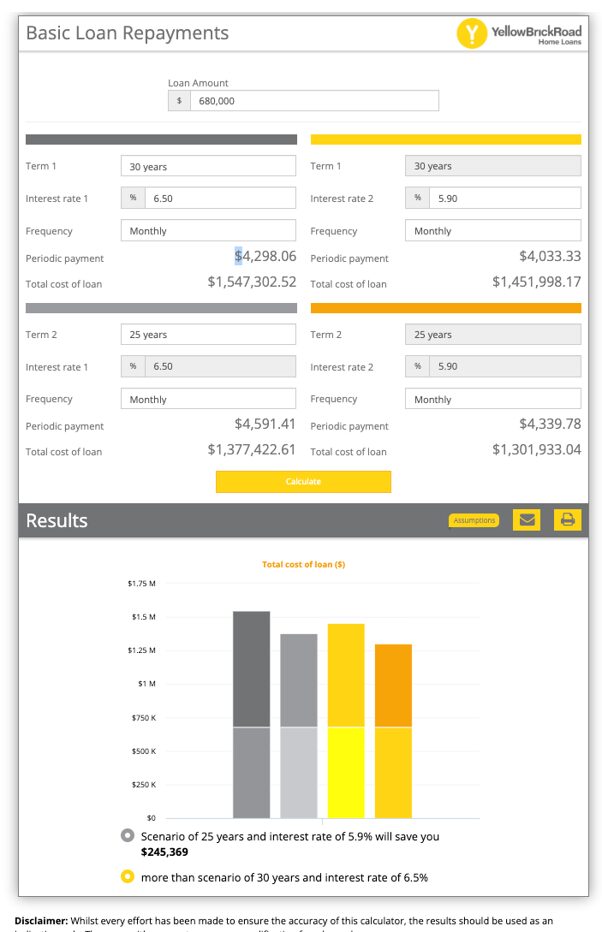
Say you took out a loan of $680,000 five years ago at a rate of 6.5%.
If a competitive rate in the current market is 5.9%, the difference of 0.6% loan balance could reduce your monthly repayments by almost $265. Over 24 months, that saving could well exceed $10,000, which in most cases comfortably covers switching costs and then some.
3. Your situation or needs have changed
Life does not stand still, and your home loan should reflect where you are now, not where you were when you signed. If your income has grown, you may want a loan that allows you to make extra repayments or use an offset account more effectively.
If you are planning a renovation, you might need to access equity in your property. These are legitimate reasons to look at whether your current loan structure still fits.
When Refinancing Might Not Be the Right Move
1. You are close to the end of your loan term
If you only have five or six years left on your mortgage, the interest savings from a lower rate may be smaller than they appear, because a larger share of your repayments are already going to principal rather than interest. The maths still needs to be checked, but it is worth factoring in.
2. You would be hit with a significant break cost
If you are on a fixed rate that has not yet expired, leaving early can trigger a break cost. This is a fee charged by your lender to cover their loss from releasing you from the fixed contract ahead of schedule. Break costs can be substantial. In these situations, it is often worth waiting until the fixed term ends before making any moves.
3. You have recently taken out your loan
If you settled your mortgage in the last 12 to 18 months, the savings from switching are unlikely to outweigh the setup costs. Refinancing tends to make the most financial sense for borrowers who have held their loan for two or more years.
What to Ask
Ask yourself four questions.
What is my current interest rate? What is the market offering right now? What would it cost me to switch? And what do I need from my loan over the next few years?
If your rate is noticeably higher than current competitive rates, the savings clearly exceed your switching costs, and your loan term is long enough to benefit, refinancing is likely worth pursuing. If any of those conditions do not hold, a broker can help you work out whether waiting makes more sense.
The important thing is not to assume the answer without looking at the numbers.
Talk to Someone Who Knows the Numbers
If you are unsure whether refinancing is the right move for you, the most useful thing you can do is have a straightforward conversation with someone who can run the numbers on your specific situation.
Speak with a local Yellow Brick Road mortgage broker. Our brokers are local and experienced who can take an honest look at whether your loan is still working for you and let you know what your options are.
