
 1800 927 927
 Contact Us
 Find a Broker
In this article:
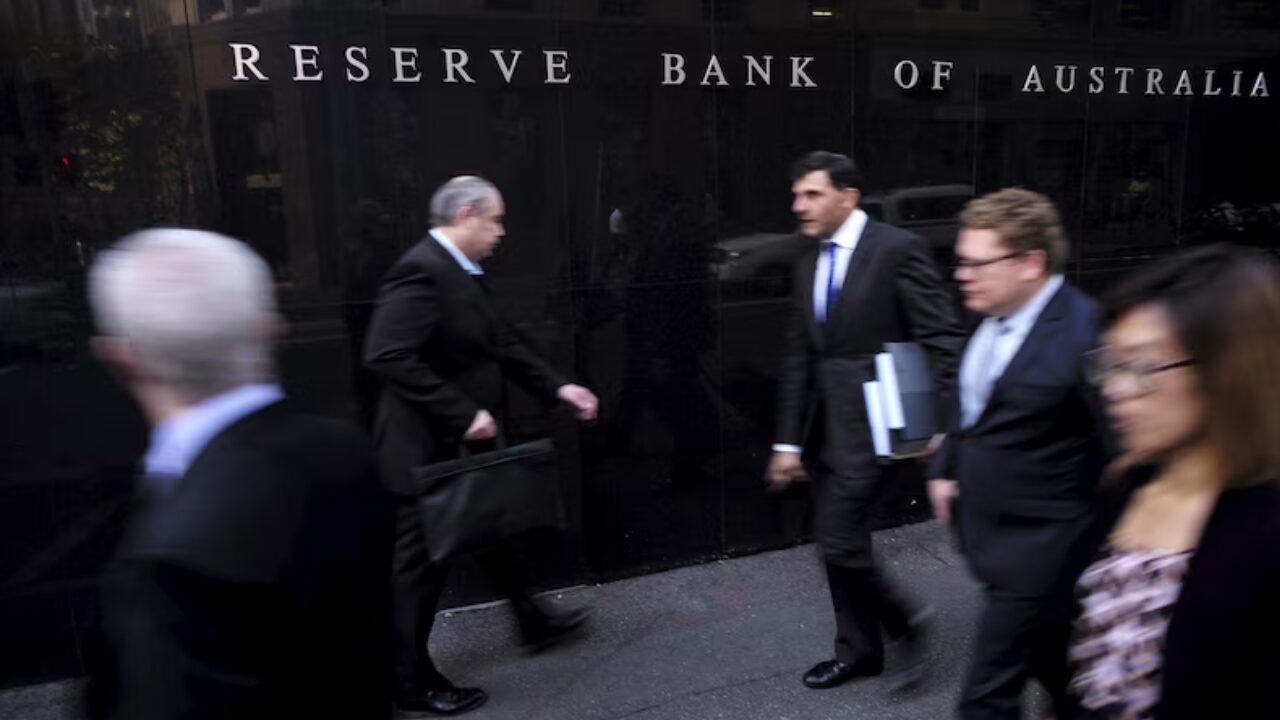
It’s the outcome financial markets, all four major banks and YBR’s own Property Insights panel had been pointing to heading into today’s 2:30pm announcement, with markets pricing in a hike at around 90% and all 29 economists surveyed by Bloomberg tipping the same move.
“If we go back a month ago or five, six weeks ago, you and I were saying definitely no rate increase. Now we’re saying it’s just a matter of which meeting, the September meeting or the November meeting. Definitely there’s gonna be one this year, just a matter of when.” – Mark Bouris, Property Insights, recorded ahead of today’s decision
Why the RBA hiked
Inflation remains the Board’s central concern, and the latest read gave it little reason to wait. The trimmed mean, the RBA’s preferred measure of underlying inflation, is running at 3.6% through the year, with headline inflation at 3.5%. Both are still well above the RBA’s 2 to 3% target band.
“The target is 2.5% annual inflation. So we’re not only a long way from getting to 2.5%, the momentum to get there has stalled.” – Stephen Koukoulas, Economist, Property Insights
Much of the recent pressure has come from outside the usual playbook. Automotive fuel prices jumped 7.5% in July alone, as global oil prices climbed and federal fuel excise relief began to unwind, a shock economists expect to keep flowing through to transport, logistics and other costs in the months ahead.
The Board’s own post-meeting statement pointed to fresh pressures layering on top of that. The conflict in the Middle East has broadened, pushing global energy prices well above what the RBA had assumed in its August forecasts, while rapid AI-related demand is driving up global prices for technology-related goods. Liaison with businesses also told the Bank that firms are either raising prices or planning to, as capacity pressures persist across the domestic economy.
The labour market gave the Board less reason for caution than it might have a year ago. Unemployment rose to 4.6% in August, still comparatively tight by historical standards, though Koukoulas expected the numbers to have made for genuine debate at the table.
“I think it’ll be a 5-4 vote to hike. I think there’ll be some debate. It won’t be unanimous.” – Stephen Koukoulas, Economist, Property Insights
In the end, the vote wasn’t as close as Koukoulas expected. The Board confirmed today’s decision was unanimous.
A housing market that has lost momentum in Sydney and Melbourne wasn’t enough to keep the Board on hold this time. The RBA doesn’t target house prices directly, but it does watch the flow-through to household wealth, spending and bank balance sheets.
The RBA’s statement
In its post-meeting statement, the Board confirmed that several of the upside risks it had flagged back in August are now materialising, pointing to fresh disruption to global oil supply and to growth and inflation both running hotter than expected.
“Since the previous meeting, some of the upside risks to inflation are materialising. There have been further disruptions to global oil supply and recent data suggest that growth and inflation in Australia have been higher than expected.” – Statement by the Monetary Policy Board, Reserve Bank of Australia, 29 September 2026
The Board was explicit that today’s move was about keeping inflation expectations anchored rather than reacting to any single data point, and that it is prepared to go further if needed.
The Board remains focused on ensuring that high inflation does not become embedded… inflation is still too high and the Board judged that, in light of recent developments, a further tightening in financial conditions is warranted to support a return of inflation to target in a reasonable period. The Board will continue to do what it considers necessary to bring inflation sustainably back to target, including increasing the cash rate target further if needed.” – Statement by the Monetary Policy Board, Reserve Bank of Australia, 29 September 2026
Today’s policy decision was unanimous.
Source: Reserve Bank of Australia, Statement by the Monetary Policy Board: Monetary Policy Decision, No. 2026-27, 29 September 2026.
What this means for your repayments
If you’re on a variable rate, today’s rise means another increase to your minimum monthly repayment, the fourth this year. Canstar’s modelling shows what a single 0.25 percentage point rise adds across different loan sizes:
| Loan size | Estimated monthly change | Estimated annual change |
| $600,000 | +$91 / month | +$1,092 / year |
| $800,000 | +$122 / month | +$1,464 / year |
| $1,000,000 | +$152 / month | +$1,824 / year |
Source: Canstar, based on the modelling used in ‘Three Hikes in a Row a Blow to Borrowers’ Budgets’, canstar.com.au, 5 May 2026. Based on an owner-occupier paying principal and interest with 25 years remaining, at the RBA average existing customer variable rate, assuming banks pass on the rise in full the month after the decision. General information only.
That takes the total increase from this year’s four hikes to $364 a month on a $600,000 loan, or $4,368 a year, and to $608 a month, or $7,296 a year, on a $1 million loan.
Cotality’s own analysis puts the average new owner-occupier mortgage at $735,000, where this year’s earlier hikes alone had already added just over $350 a month to repayments and cut borrowing capacity by 7.0%, or more than $53,000, before today’s rise is factored in.
What the housing market looked like going into today
Cotality’s September 2026 Monthly Housing Chart Pack shows a market that has lost momentum since the start of the year. National dwelling values fell 3.1% over the three months to August, even though values are still up 2.7% over the past year.
The national figure hides a wide split. Combined capital city values fell 3.7% over the quarter while combined regional values fell a smaller 1.2%. Sydney (down 4.7% for the quarter, down 4.6% annually, and now 7.1% below its February 2026 peak) and Melbourne (down 3.9% for the quarter, down 4.7% annually) are driving the capital city weakness, while Perth, Brisbane, Adelaide and Darwin remain well up over the past year, up between 8.6% and 15.6%.
Buyer demand has cooled alongside values. The four-week average auction clearance rate was tracking at 49.5% at the end of August, holding below 50% since early June, with Brisbane’s clearance rate the lowest of the capitals at just 32.8%. Homes are taking longer to sell, with the national median time on market rising to 39 days, up from 28 days a year earlier, and vendors are discounting harder, with the median vendor discount reaching 4.0% nationally, up from around 3.1% at the start of the year.
The RBA’s own statement corroborated the slowdown, noting that hosing prices have fallen in most capital cities and that new housing loans have declined noticeably.
What comes next
Even with today’s move, and the Board’s own warning that it will raise the cash rate further if needed, most economists don’t expect the tightening cycle to run much further. CBA, Westpac and NAB all see this as the likely final hike for now, though ANZ is tipping one more in November.
“By the time it gets to the November meeting there is likely to be more evidence of a cooling economy, falling home prices, a softer jobs market and rising recession risks.” – Shane Oliver, Chief Economist, AMP
For now, borrowers should plan around today’s rate holding for an extended period rather than assume relief is close.
What borrowers should do now
Know your current rate. Many borrowers know their repayment amount but not the actual interest rate they’re paying, and that’s the starting point for any comparison.
Check when you last reviewed your loan. If it has been more than 12 months, the market has likely moved around you, whatever the RBA does today.
Understand your options before you need them. Whether you want to reduce repayments, consolidate debt, access equity or pay your loan down sooner, it helps to know what’s available.
Taking a few minutes to understand where your loan stands today could make a meaningful difference over the life of your mortgage.
If you’d like to see whether your current loan is still competitive, speak to a YBR broker or explore your refinancing options at ybr.com.au/refinance-home-loan.
