
 1800 927 927
 Contact Us
 Find a Broker
In this article:
What the Latest Property Data Reveals:
Property headlines thrive on drama. Whether it is talk of skyrocketing prices or looming crashes, finding the truth in the noise can feel challenging. But when you look past the sensationalism and focus purely on the raw numbers, the reality of the Australian property market is much clearer.
Recently, Mark Bouris sat down with Tim Lawless, Research Director at Cotality, on Property Insights to cut through the speculation.
As one of the most trusted voices in Australian real estate data, Tim offered a reality check on where the market is actually heading.
Together, they unpacked the forces driving home values, buyer behaviour, and market resilience.
Here are six essential lessons from their conversation that the data is not lying about.
2. “Lower-Priced Segments” Most Competitive
While home value growth is currently strongest in regional areas and capital cities outside of Melbourne and Sydney, Cotality has found that this growth is “increasingly concentrated in lower-priced segments.”
The Monthly HVI reveals that “every capital city is recording stronger growth in the lower quartile, as demand concentrates where credit availability and first home buyer incentives have the greatest influence.“
Lawless said: “The largest difference between upper and lower quartile value growth is in Sydney, where lower-tier house values are up 2.9% year-to-date compared with a 3.3% fall across the most expensive quarter of the market.”
Bouris emphasised that housing affordability remains a pressing concern for many Australians, driving demand for properties at the lower end of the price spectrum. He highlighted that first-home buyers, investors, and downsizers are all vying for similar properties, creating significant pressure in this segment of the market.
Lawless explained that the resilience of demand in this price bracket underscores the importance of targeted policies aimed at increasing supply and improving housing accessibility for Australians across all income levels.
3. The Impact of Construction Costs
Anyone who has tried to renovate or build a home in recent years would know that construction costs have been a major sticking point.
Lawless pointed out: “Construction costs weren’t growing quite as quickly, but I think we’re about to see that re-accelerate on the back of what’s happening in Iran. So higher fuel costs immediately flow through to higher construction costs.”
“I’m hearing some horror stories about PVC and plumbing products going up 30% in a month. So I think the complexity of getting supply into the market is going to remain with us, maybe even get worse. And it’s not just the cost, it’s also the labour markets.”
“Labour is really tight. There’s a lot of competition with big infrastructure projects that have the same inputs for materials and labor. So it’s going to be really hard to get, you know, 800,000 to 900,000 homes completed, let alone the 1.2 million.”
Mark agreed, noting that when the cost of materials and labour goes through the roof, the value of existing homes can increase. This is because building new houses becomes less feasible due to rising costs, which limits the number of new properties entering the market. With fewer new homes available (restricted supply), the price of existing homes tend to remain steady or increase.
4. Consumer Sentiment a Key Driver of Activity
How Australians feel about the economy gives an indication of what they are likely to do with their money. One of the most striking insights from Cotality’s research is a strong correlation between the national mood and property transactions.
“When you look at consumer sentiment over time, and you overlay that with transactional data from housing, (i.e. how many homes are selling) it’s highly correlated,” Lawless told Bouris.
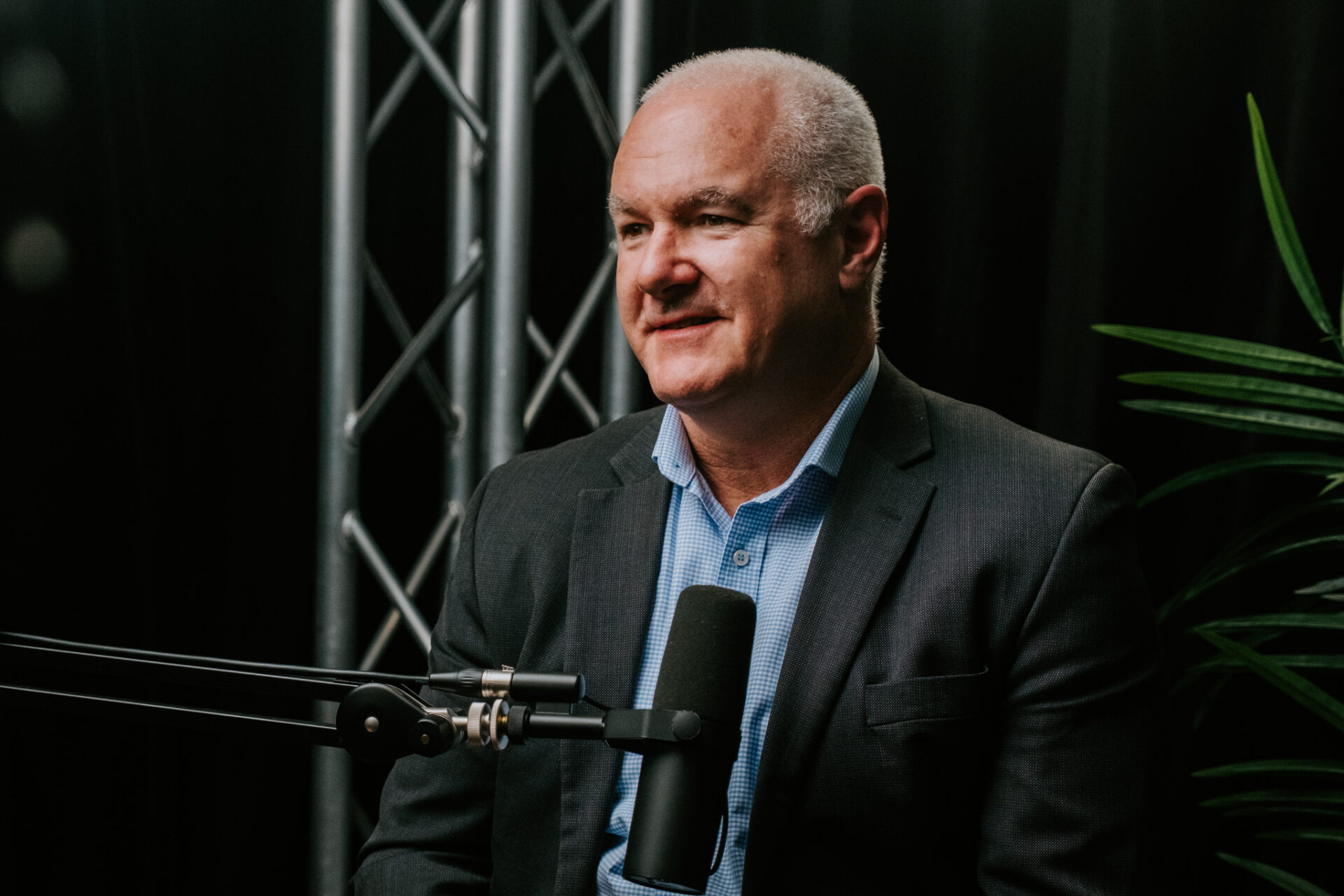
“So when sentiment falls, you generally see less housing activity. When there’s more confidence, you see more housing activity.”
Cotality reported in its Monthly Home Value Index (May 2026) that whilst the impacts of overseas conflict are yet to flow through to the “official data, the effect on household confidence and balance sheets has been swift.”
“Consumer sentiment has fallen sharply, prompting a more cautious approach to high-commitment financial decisions such as property purchases. Historically, sentiment has been closely linked to home sales.”
5. Regional Resilience is Real
For decades, the Australian property dream was heavily focused on the inner suburbs of major capital cities. When the pandemic hit, we saw a massive surge in people moving to regional areas. Commentators at the time assumed this was a temporary trend that would reverse. The data proves those assumptions wrong.
“Regional markets tend to be a little bit more resilient than capital cities,” Tim highlighted.
“We are seeing values rising around 3% to 3.5% quarter on quarter in these areas.Internal migration to regional Australia remains well above pre-pandemic levels. People have tasted the lifestyle change, and they are staying.”
According to the Monthly HVI: “Regional markets have been more resilient amid the broader slowdown, supported by relatively lower values and above-average internal migration. Over the first four months of the year, the combined regionals index rose 4.2% versus a 1.8% lift across the combined capitals.”
6. Government Needs to Work on Increasing Supply
While interest rates and consumer sentiment grab the headlines, the fundamental issue underpinning Australia’s property market is a severe lack of supply. Until more homes are built, housing affordability will remain a challenge.
Lawless said: “We’re seeing a lot of these demand side policies that are just pushing more people into the market, but we’re not doing enough to address supply. I mean, I can’t think of anybody that thinks we’re going to get anywhere near 1.2 million well located homes” (which is the Government’s current target).
Lawless believes that there are a broad range of solutions.
“The government needs to do more to facilitate more construction activity. We’ve seen some good examples of this. For example, the South Australian government just partnered with the federal government for an $800 million low interest loan that’s very much targeted to fast track early stage infrastructure development, so water connection, sewerage connection, so they develop for Greenfield developments.”
“They’ve just seen an announcement in Tasmania, another 2000 homes being funded at low interest or no interest, maybe for the state government.”
Moving Forward with Confidence
The data does not lie. The market cycle is shifting, consumer sentiment remains a powerful driver of activity, and regional Australia continues to hold strong. But no matter what the national averages say, your property journey is entirely unique to you.
People deserve guidance from a local expert they can trust. Whether you are looking to purchase your first home, refinance, or find an investment, our local YBR Mortgage Brokers provide the transparency, simplicity, and choice borrowers are looking for.
Reach out to an experienced YBR Mortgage Broker today.
We’re here to help.
