 1800 927 927
 Contact Us
 Find a Broker
In this article:

What is a bridging loan?
A bridging loan is short-term finance that lets you buy your next home before your current one has sold. It covers the period between the two settlements, so you are not forced to sell first, rent in between or rush a sale to meet a deadline.
Once your existing home sells, the sale proceeds pay down the bridging debt. What is left becomes your ongoing home loan.
How does a bridging loan work?
Lenders talk about two numbers.
- Peak debt. This is the most you will owe during the bridging period. It is usually your current home loan, plus the purchase price of the new home, plus costs such as stamp duty and legal fees.
- End debt. This is what you owe once your existing home has sold and the proceeds have been paid in. It is the loan you carry forward.
During the bridging period, many lenders let the interest be added to the loan (capitalised) so you are not making repayments on both properties at once. Others ask for interest-only repayments. Either way, interest is charged on the peak debt, which is why the length of the bridge matters.
How long does a bridging loan last?
It depends on the lender, but bridging periods are commonly up to six months when you are buying an existing home and up to 12 months when you are building. If your home has not sold by the end of the period, the lender will want a plan, and that can include selling at a lower price than you hoped.
A worked example
Say you owe $300,000 on your current home and you buy a new home for $900,000, with $50,000 in purchase costs.
- Peak debt: $300,000 + $900,000 + $50,000 = $1,250,000
- Your current home sells for $800,000, with $20,000 in selling costs, so $780,000 comes off the debt
- End debt: about $470,000, plus any interest added during the bridging period
*This is a hypothetical illustration only. It does not include interest, and your own figures will depend on your lender, your rate and how long the sale takes.
What are the risks?
A bridging loan solves a timing problem. It does not remove the risk. Before you commit, weigh up:
- Your home may take longer to sell than you expect, and interest keeps building while it does
- It may sell for less than you planned, which leaves you with a bigger end debt
- Lenders assess whether you can afford the end debt, and many want to see solid equity in your current home
- Not every lender offers bridging finance, and policies differ widely
When does a bridging loan make sense?
It tends to suit people who have strong equity in their current home, a realistic view of what it will sell for, and a clear reason to buy first, such as a home that rarely comes up in the right street. If you could sell first and negotiate a longer settlement, or line up both settlements on the same day, that can be a cheaper path.
Talk it through before you bid
Bridging finance is one of those areas where the detail decides whether it works. A local Yellow Brick Road broker can look at your equity, your likely sale price and which lenders offer bridging loans, then show you the peak debt and end debt in plain numbers. Get in touch before you make an offer, not after.
This article provides general information only and should not be relied upon in place of appropriate professional advice.
Get it right from the start with professional help.
“Insurance. Credit cards. Rates. Water bills. Electricity. Health. It goes on and on and on.”
It’s a list that strikes unease for many mortgage holders across the country but it’s a common sentiment shared by so many Australian mortgage holders right now: “there is so much anxiety around it each month,” Andrew Andreou told Channel Nine’s A Current Affair.
Andrew is one of five lucky winners of YBR Home Loans’ Fair Go Giveaway, who told A Current Affair about the stress and suffering his family have experienced each month when their mortgage bill comes through from their lender.
Unfortunately, Andrew and his family are not alone. In the current interest rate environment, the average Aussie home loan has increased by over $12,000 a year, following 11 rate increases in the last 13 months.
Thousands of Australians shared their stories when they entered YBR Home Loans’ Fair Go Giveaway, and how they struggled to cope during the largest rate-hiking period in Australia’s history. Five entrants have won $12,000 each to help families cope with rising mortgage repayments.
A Current Affair was there to capture the moment when YBR’s chairman, Mark Bouris, surprised Andrew and his wife Phyllis, who were extremely grateful to have been drawn as one of the lucky winners across Australia:
“The kids were ecstatic when they heard. They said, ‘Dad we’ve never won anything’,” Andrew told A Current Affair.
“When we receive the monthly letter from the bank, it’s like, here we go again. We need a new plan again, and you start looking at your budget, trying to find where you can make some more savings.”
The Andreous were not alone, with Mark Bouris and A Current Affair also visiting another one of the five lucky winners, Joanne, who was shocked to see Mark Bouris surprise her with a visit.
“Thank you so much,” Joanne told Bouris, “It’s so generous of you and it’s life-changing to me, my husband and Parker (Joanne’s new born baby).”
Bouris reminded the Channel Nine audience that the Fair Go Giveaway was more than just a chance to help out Australian families: “We wanted to give a voice to these individuals and to stop treating households like data points and start treating them like human beings.”
Bouris and YBR Home Loans commissioned a study to analyse the wellbeing of those Australian mortgage holders feeling the pinch of rising interest rates, which culminated in Mark Bouris handing the ‘Human Impact Report’ to the Reserve Bank Governor, Philip Lowe.
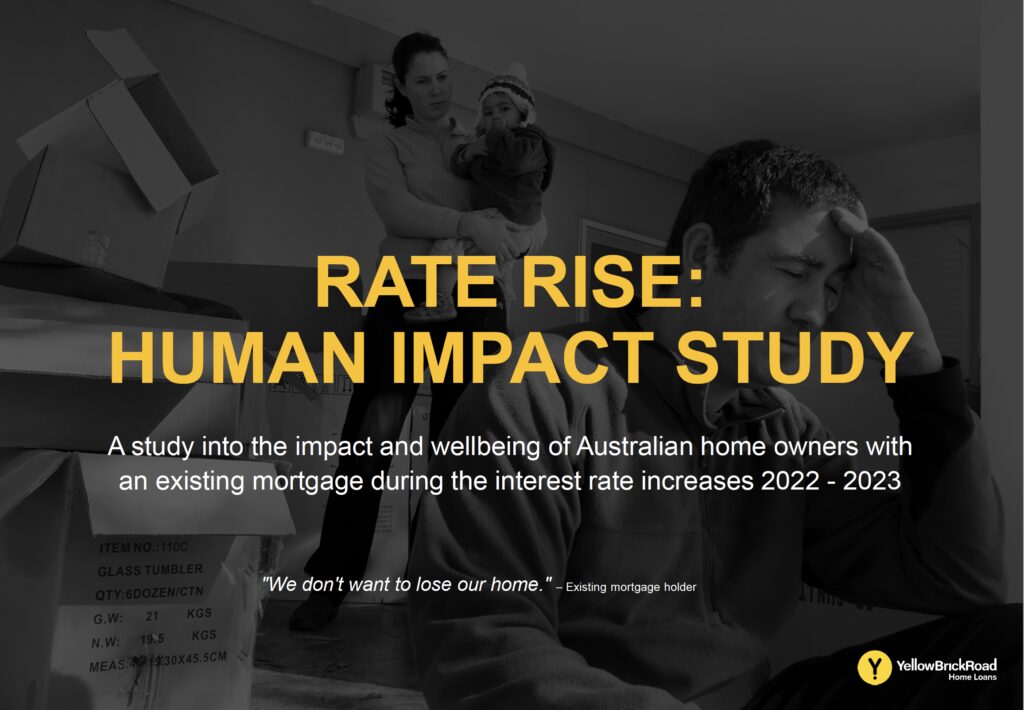
Why? In essence, to raise awareness of how families have been struggling in the current environment and to campaign for the RBA to incorporate the human impacts of rate rises into their considerations on monetary policy.
“We’ve sent our YBR Human Impact Report to the RBA Governor to stress to him and give him concrete evidence of the real, human impact on people.”
“He wouldn’t ever get to do what I’m doing here today, to go around and see how people are actually doing, how they’re hurting and probably more importantly, how much more relief they need to get.”
The report outlined how many Australians are feeling the pressure of rising interest rates and included personal stories from participants in YBR’s Fair Go Giveaway.
“People are feeling it,” Bouris said. “Rates aren’t going down and that’s impacting people. It’s impacting their ability to put food on the table, send their kids to school activities or buy presents.”
“When inflation is at record levels, and cost of living pressures spreading insidiously to all aspects of the daily lives of households, the last thing mortgage holders needed was a record setting rate hiking period.”
The Human Impact Report was created in the hope of sparking conversation within government, banking and other organisations about how rising interest rates are affecting Australians.
“It is really important that people understand how hard it is for so many mortgage holders to make ends meet,” Bouris said. “They need relief, not more pressure.”
The Andreous, and the four other Fair Go Giveaway winners, are now enjoying the relief of their $12,000 windfall – something they will never forget: “We can breathe,” said Joanne.
“I can give my kids what they need, because they had to go without for a while,” said Phyllis.
With this money they can continue to focus on providing for their families without having to worry about the rising cost of living. The Human Impact Report may not have been able to stop the increase in interest rates, but it has brought much-needed recognition of the shortcomings of monetary policy. It’s a prime example of how sometimes, a ‘Fair Go’ can go a long way.
Click here to see Mark Bouris’ appearance on A Current Affair.
